

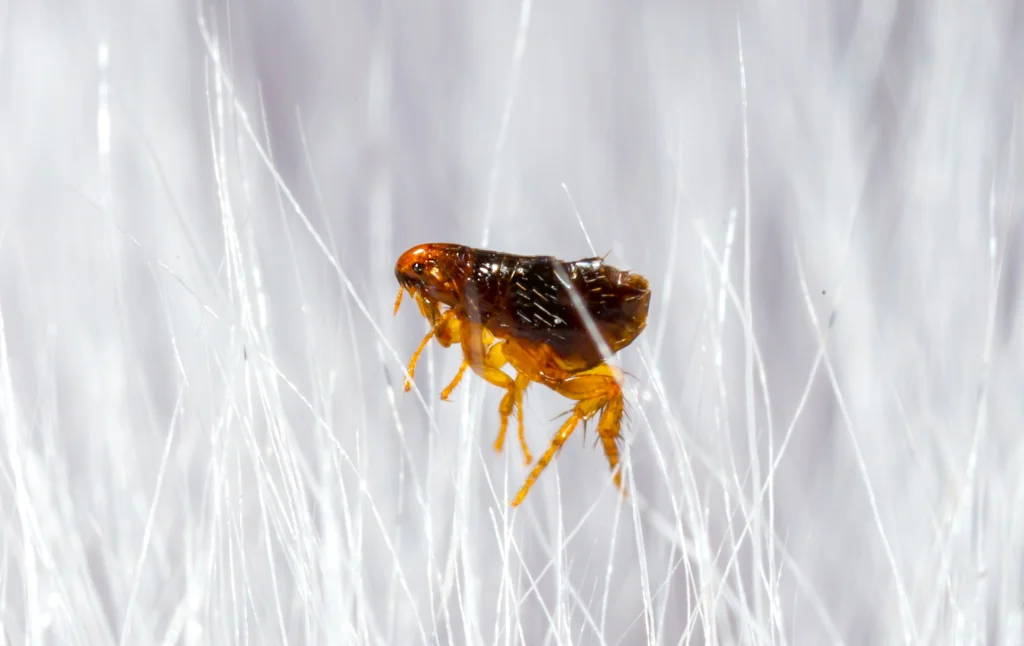
Is your dog scratching more than normal lately? Constant itching can be a sign of more than just dry skin—fleas may be to blame. This scratching is a common concern for pet owners all over the Fairview Heights, IL area. However, this doesn’t always mean your pet has fleas. There are several reasons your dog could be scratching, including allergies or skin infections. Still, fleas remain one of the most common culprits, and they should be ruled out first. Below, we’ll talk about identifying fleas, understanding their life cycle, and exploring treatment options for both your pet and your home. If things escalate quickly, don’t hesitate to contact a local Fairview Heights, IL pest control professional who can help.
Flea Identification
Fleas are tiny—like, really tiny—which means you may find it challenging to identify them at first. However, there are some telltale signs that can help you spot an infestation. Fleas are attracted to hosts and, while they can bite humans, they rely on animals like dogs and cats to reproduce. If your pet is scratching excessively, this could indicate a flea issue. Use a fine-tooth comb to check your pet’s fur. Look for small black specks (flea dirt) or fast-moving insects darting across the skin. Be sure to inspect areas your pet frequents, such as bedding, rugs, and furniture. Outside, fleas often lurk in shaded or moist areas like under decks or near shrubs, making it easy for pets to pick them up during playtime. If you confirm fleas, you’ll need to treat both your pets and your environment to stop the infestation cycle.
The Flea Life Cycle
Understanding the flea’s lifecycle is critical to effective treatment. Fleas develop in four main stages:
- Egg: A single female flea can lay up to 50 eggs each day, with many dropping off your pet and dispersing throughout your home.
- Larvae: The eggs hatch into worm-like larvae that hide in carpet fibers, cracks in the floor, and pet bedding. They feed on flea dirt and organic debris.
- Pupa: After molting twice, the larvae spin a cocoon, becoming pupae. This stage is incredibly durable and can persist for several weeks.
- Adult: Adult fleas emerge when they sense a nearby host through vibrations, carbon dioxide, or heat. They are ready to feed within hours and reproduce shortly after.
Because adult fleas represent only about 5% of the flea population, addressing every stage of this cycle is key to eliminating them for good.
Treating Fleas on Pets
When treating your pet for fleas, you have a range of options:
- Oral Medications: These are fast-acting and often require a vet’s prescription. Many newer oral options interrupt the flea life cycle entirely.
- Topical Treatments: Medicated shampoos, flea collars, and spot-on treatments can provide relief. Be sure to use species-specific products to avoid harmful reactions.
- Stage-Specific Products: Some medications only target adults, while others focus on eggs or larvae, so you may need to use a combination of treatments for full coverage.
Veterinarians in Fairview Heights, IL typically suggest year-round flea prevention, particularly during the warmer months when flea activity tends to spike.
Treating Fleas in Your Home
Treating your home is just as important as treating your pet. Here’s how:
- Clean Thoroughly: Vacuum carpets, rugs, and furniture daily. Immediately dispose of vacuum bags or clean canisters outside.
- Wash Everything: Use hot water to wash pet bedding, blankets, and other fabric surfaces your pet touches.
- Chemical Treatments: Use foggers or sprays that kill both adults and larvae. Consider using Insect Growth Regulators (IGRs) to prevent immature fleas from maturing.
- Outdoor Areas: Apply flea sprays to your yard, especially in shady spots, under porches, and near pet lounging areas. Choose products that are labeled as pet-safe and designed for lasting flea control.
Keep in mind: fleas can quickly rebound if just one life stage is missed. Repeat treatments may be necessary for full eradication.

Professional Flea Treatment
While DIY treatments can work, they often fall short. One of the most effective solutions is to call a professional pest control company. Licensed experts have access to advanced products and equipment that can target all life stages of the flea. They’ll conduct a full inspection of your Fairview Heights, IL home and yard, recommend a tailored treatment plan, and provide follow-up services to ensure the infestation is fully eliminated. Preventative pest control services can also be scheduled to stop fleas from returning in the future.
Keep fleas from taking over your home in Fairview Heights, IL. If you’re struggling to get the problem under control, contact IMEL Pest Control.