
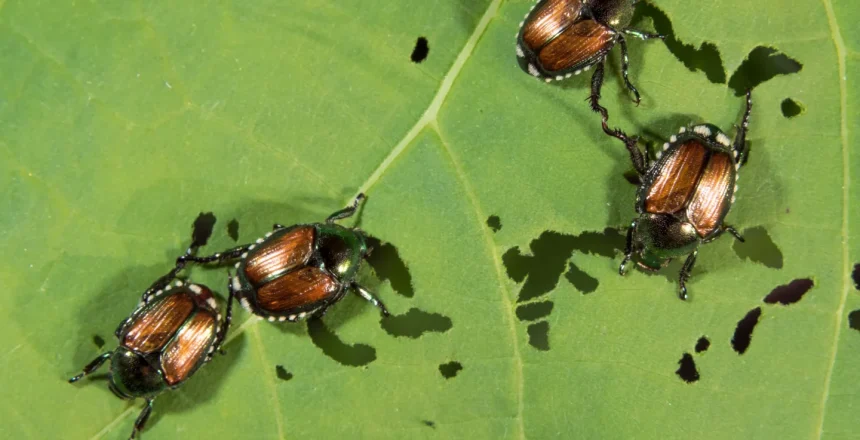
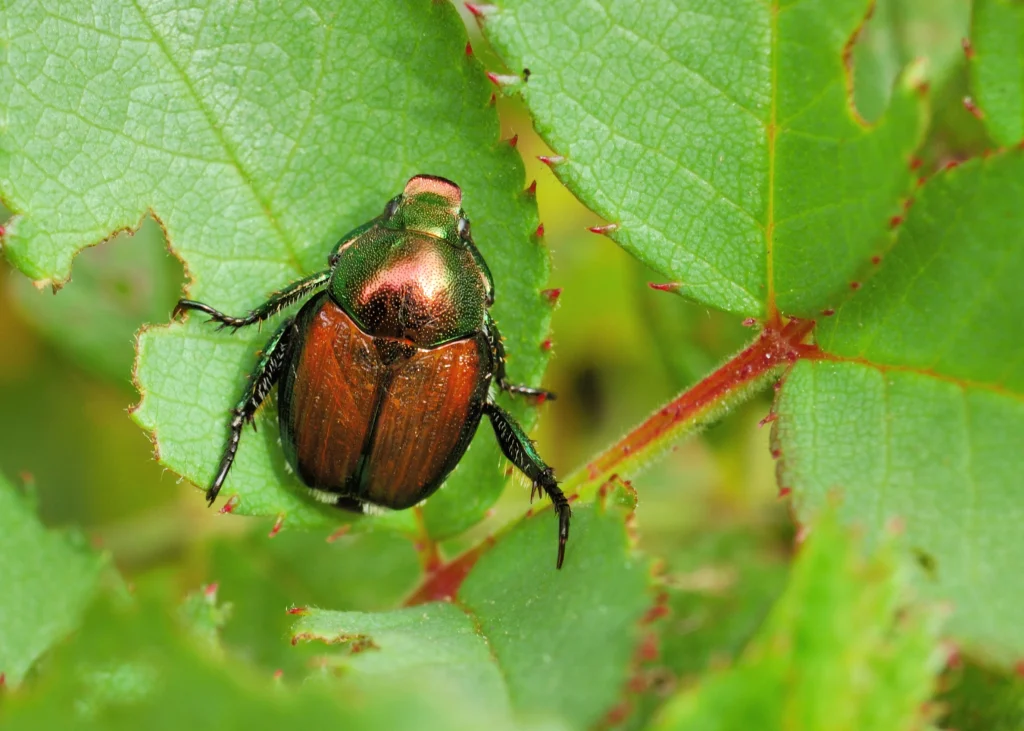
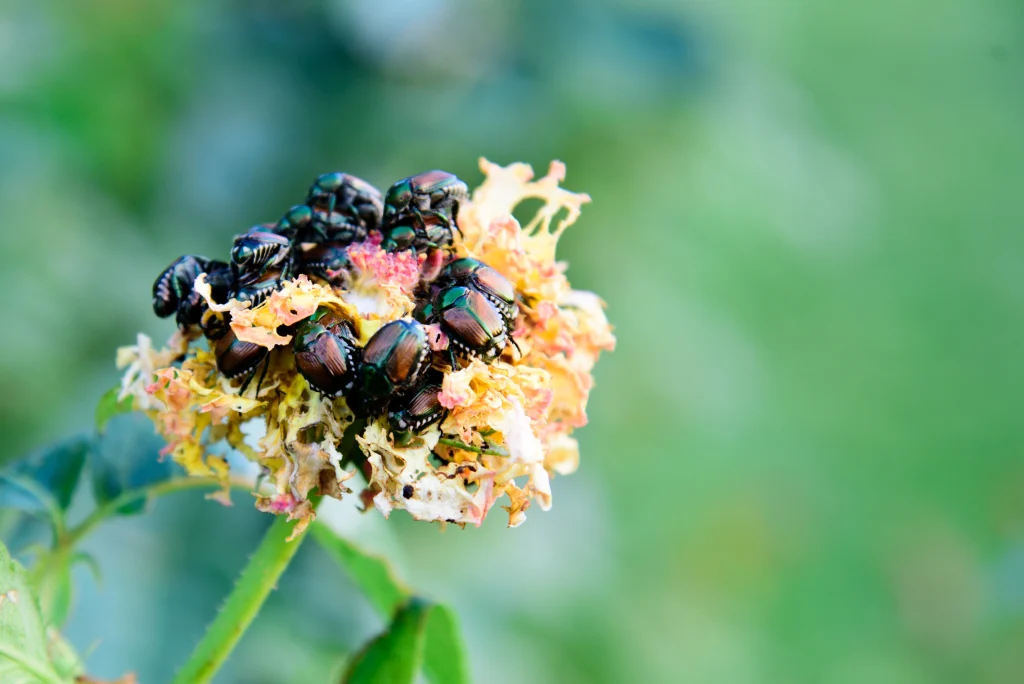
Japanese beetles (Popillia japonica) are a common pest in many gardens in Glen Carbon, IL, known for their destructive feeding habits. These metallic green and copper-colored insects can decimate a garden in a short period, targeting a wide range of plants including roses, beans, grapes, and many ornamental plants. Fortunately, there are several effective strategies for controlling and preventing the devastation caused by these unwelcome guests. Here’s a comprehensive guide to keeping Japanese beetles out of your garden.
Understand Their Life Cycle
Japanese beetles emerge from the ground in early summer and live for about 30 to 45 days. The females lay eggs in the soil during the summer, and these eggs hatch into grubs, which remain underground feeding on roots until the following spring. Understanding this cycle is crucial as it allows gardeners to target both the grubs and the adult beetles.
Hand Picking
Although it might seem tedious, hand picking can be surprisingly effective, especially in smaller gardens. Early in the morning, when the beetles are less active, gently shake them off your plants into a bucket of soapy water. This method is most effective when done regularly and thoroughly.
Traps
Beetle traps can be useful, but they should be used cautiously in Glen Carbon, IL. These traps attract beetles using pheromones or floral scents. While they can capture large numbers of beetles, they often attract more beetles into your garden than they catch. If you choose to use traps, place them around the perimeter of your property, far away from your plants.
Row Covers
During the peak of beetle activity, usually from late June through July, use fine mesh row covers to protect your most susceptible plants. This physical barrier prevents the beetles from reaching the plants to feed and lay eggs. Remember to remove the covers to allow for pollination if you are protecting flowering plants.
Natural Predators
Encouraging natural predators is a long-term solution for Japanese beetle control. Birds, toads, and beneficial insects such as ground beetles can help reduce the population of both grubs and adult beetles. Creating a habitat that attracts these predators can provide a significant advantage.
Nematodes
Beneficial nematodes are microscopic worms that can be applied to the soil to control grub populations. They are most effective when applied in late summer or early fall. The nematodes enter the grubs’ bodies and release bacteria that kill them, effectively reducing the future population of adult beetles.
Milky Spore
Milky spore is a natural bacterial product that targets only the grubs of Japanese beetles. When applied to the soil, it creates a long-lasting protection as the spores germinate and multiply within the grubs, eventually killing them. This method can take a few years to become fully effective but can provide control for up to 20 years.
Avoid Overwatering
Japanese beetle grubs thrive in moist soil conditions. By reducing irrigation during late summer when the eggs are laid, you can make your soil less attractive to female beetles looking to lay eggs.
If you live in Glen Carbon, IL and are looking for a company who can help rid your garden of Japanese beetles, call IMEL Pest Control.